
What does pool filter repair in Temecula and Murrieta involve?
Filter repair assesses leaks, pressure changes and water clarity alongside the tank model and connected circulation system. A damaged tank or clamp can create a serious pressure hazard. Do not open a pressurized filter; stop unsafe operation and request an assessment before selecting replacement parts or cleaning work.
- How much does pool filter repair in Temecula and Murrieta cost?
- Pool Filter Repair is quoted for the actual equipment, water condition and work required; no fixed specialty rate is advertised here. The $159 monthly starting price applies to recurring pool care, not automatically to this service. Request an assessment and a clear scope and price before deciding.
- Can Sharkey's service my property in Temecula and Murrieta?
- Sharkey's lists Temecula, Murrieta, Wildomar, Winchester, Menifee, Canyon Lake, French Valley as service areas. Share your full address and access arrangements to confirm availability and a route day. A city or subdivision guide is not proof of an existing customer, HOA contract or guaranteed service at every address.
- What should I send for a pool filter repair quote?
- Start with your pool type, requested service and city. Include your address, current water condition, equipment model numbers and relevant photos when available. Sharkey's confirms access, scheduling and the work for your property before you agree. Do not open unsafe equipment to obtain a photograph.
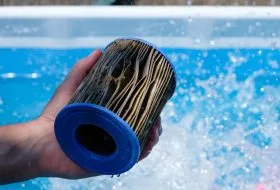
Your pool filter repair guide
Pool filter concerns can involve water clarity, pressure changes, visible leakage, or material returning to the pool. Each observation needs context because filtration performance depends on circulation, equipment condition, and the pool's overall water care. Sharkey's Pool Cleaning serves Temecula, Murrieta, Wildomar, Winchester, Menifee, Canyon Lake, and French Valley. Contact the business to discuss filter symptoms and confirm the availability and scope of the requested work. This page explains how to prepare useful information, distinguish cleaning questions from repair concerns, and evaluate possible next steps without opening a pressurized filter or assuming a diagnosis.
Describe the Filter Concern in Observable Terms
Begin with the change you can actually see. Is water collecting near the filter, does the pressure reading differ from its familiar pattern, or has the pool become harder to keep clear? Note whether the issue appeared suddenly or developed over several weeks. If material seems to return through the pool outlets, describe its appearance and when it shows up. Avoid identifying an internal failure from appearance alone. Several conditions can produce similar outward symptoms, so a careful account of the timing and surrounding circumstances is more useful than a confident guess.
If the pressure gauge is readable from a safe position, share its current reading and any recorded reading from a comparable normal operating condition. A single number without context does not establish whether the filter needs cleaning or repair. Pump speed, system configuration, and gauge condition may affect interpretation. Do not loosen a clamp, remove a lid, or open a filter to gather information. Pool filters can contain stored pressure, and visible damage or leakage around an enclosure should be discussed promptly with an appropriate professional rather than investigated through trial and error.
Separate Filter Cleaning from Equipment Repair
Cleaning and repair address different questions, even when both are relevant to the same filter. Cleaning concerns accumulated material and maintenance needs; repair concerns a component or assembly that may not be functioning as intended. A dirty filter does not automatically require replacement parts, while a damaged component is not necessarily resolved by another cleaning. Explain when the filter was last serviced and whether that service changed the symptom. If records are incomplete, provide your best estimate and label it as such instead of presenting uncertain maintenance history as a confirmed fact.
Ask whether the reported concern should begin as a maintenance discussion, an equipment evaluation, or a combination of the two. The answer may depend on the type of filter, its history, and the symptoms involved. Do not assume that a routine cleaning visit includes repairs, replacement elements, or work on surrounding plumbing. Clarify each item separately before authorizing it. It is also worth asking what continuing water care issues might remain after the filter concern is addressed, since restoring filtration equipment does not automatically resolve every cause of cloudiness or recurring debris.
Your pool. A clear next step.
Discuss your filter problem
Include pressure changes, visible leaks and the filter model.
No payment to request a quote. Work and pricing are agreed before you decide.
Account for Filter Type and System Context
Different filter designs have different components and maintenance requirements. If you know the type, include it in your inquiry along with a visible model label or a photograph of the complete unit. If you do not know, an exterior photograph may still help frame the conversation. Avoid ordering parts based on a similar-looking image online. Components can vary between models and revisions, and a part that appears compatible may not be appropriate. Identification is a starting point for discussing the equipment, not a substitute for confirming the actual repair needs.
The surrounding circulation system matters as well. Mention recent pump changes, valve work, unusual operating settings, or new accessories connected to the same plumbing. Explain whether the filter symptom occurs during normal pool circulation or only when another feature is running. A pressure change following unrelated equipment work may require a different discussion than a slow change across an ordinary maintenance interval. Ask whether connected equipment needs consideration before deciding on a filter repair. Keeping the whole system in view can prevent an overly narrow recommendation based on the filter's appearance alone.
Connected pool services
Treat Leaks and Structural Concerns Carefully
A wet area near the filter deserves a clear description of where moisture is visible and when it appears. Water at a nearby pipe connection raises different questions from water emerging at a tank seam or closure area, but either observation should be assessed without touching pressurized components. Photograph the overall area only if it is safe to do so. Do not tighten closures, apply makeshift patches, or attempt to reproduce a leak by changing operating conditions. Ask for guidance about the equipment's status while waiting for an appropriate evaluation of the concern.
Visible cracks, distortion, or recurring leakage may affect whether a repair is a sensible option, but the decision depends on the actual component and condition. Ask which parts are considered serviceable and whether a proposed repair addresses the source of the problem rather than only the visible symptom. If replacement is discussed, request an explanation of why the existing assembly is not the preferred candidate for repair. The goal is not to preserve equipment at any cost; it is to understand the reasoning, limitations, and separate responsibilities associated with the proposed next step.
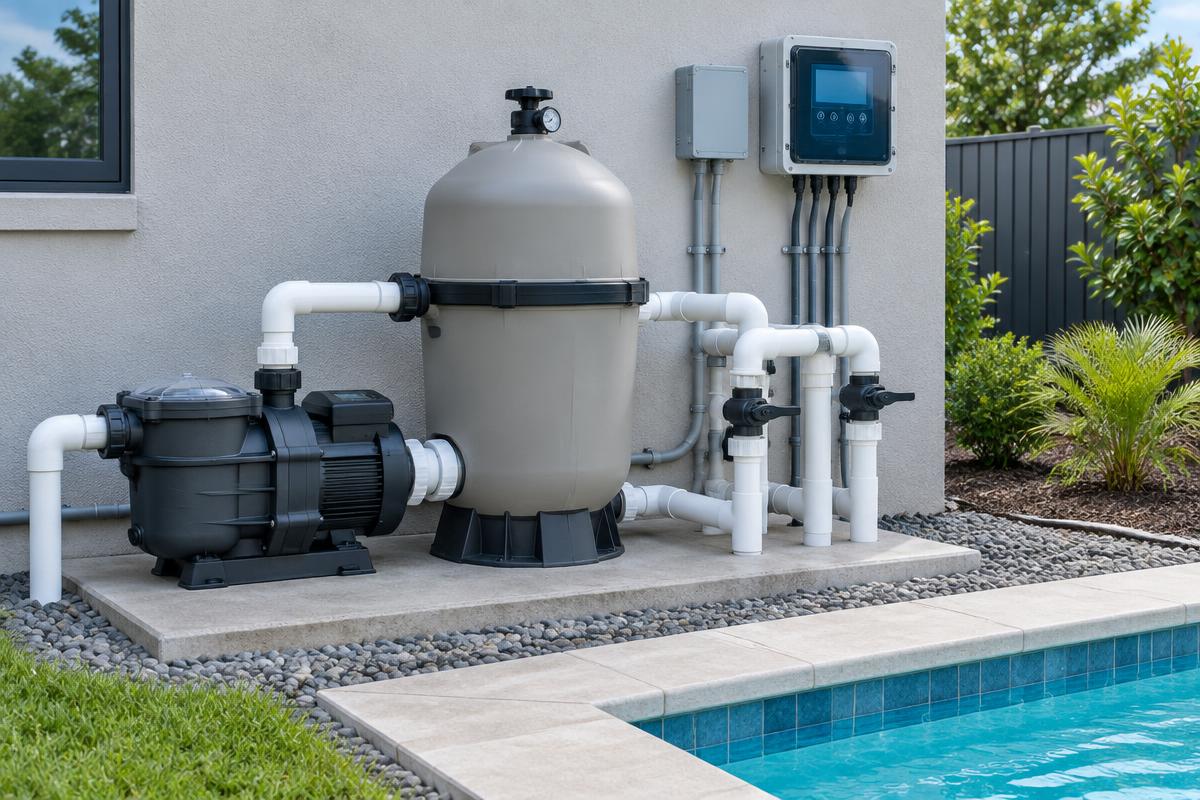
Ready to discuss pool filter repair? Request your property-specific quote.
Compare Limited Repairs with Filter Replacement
A limited repair may address a specific worn or damaged component while leaving the main filter in place. Before approving that approach, ask about the condition of the remaining assembly, relevant maintenance history, and any unresolved performance concerns. If the pool has struggled with clarity, determine whether the repair is expected to address filtration performance or only a separate leakage issue. Those outcomes should not be treated as interchangeable. A clear scope explains which concern the work targets and what other conditions may still need attention after that work is completed.
Replacement introduces additional considerations, including the filter's suitability for the circulation system, available space, service access, and compatibility with existing plumbing. Ask how a proposed replacement differs from the current arrangement and why those differences matter for your pool. Do not assume that greater physical size alone establishes the best choice. Installation planning and repair diagnosis are separate tasks, even when one conversation leads to the other. Request equipment-specific pricing and scope rather than relying on any advertised residential cleaning rate, which does not establish filter repair or installation charges.
Prepare Your Filter Service Questions
Before contacting the business, gather the filter's visible identification, approximate age if known, recent maintenance history, and a short symptom timeline. Include comparable pressure observations only if you already have them; do not change settings simply to create a test. Mention whether the concern involves leaking, clarity, returning material, or several issues together. Ask what information is needed to decide on an appropriate next step and whether the work you are requesting is available. This keeps the inquiry practical while avoiding an expectation that a photograph can establish a complete internal diagnosis.
Contact Sharkey's Pool Cleaning at 951-725-1603 or info@sharkeyspoolcleaning.com for a filter-related inquiry in Temecula, Murrieta, Wildomar, Winchester, Menifee, Canyon Lake, or French Valley. Confirm route availability, access needs, and the distinction between cleaning, repair, and possible replacement discussions. Let the business know about locked gates, pets, or restricted equipment access before making arrangements. Keep any recommendations and unanswered questions together so you can compare the proposed scope with your original concern. Clear communication is particularly helpful when maintenance history is incomplete or several parts of the circulation system have changed.
What is included, and what needs a separate quote?
Monthly service starts at $159. This is a starting rate, not a promise that every listed task is included at that price. Your package and property-specific quote establish the work.
| Task | Service boundary |
|---|---|
| Testing, basic balancing, basket and equipment checks | Recurring care; scope confirmed in your package |
| Brush, skim and bottom cleaning | Package-dependent; not all included in Basic |
| Two salt-cell cleans per year | Included in Complete; otherwise discuss scope |
| Two D.E. / multi-cartridge filter cleans per year | Included in Complete; otherwise discuss scope |
| Repairs, installation, tile work and green recovery | Separately assessed and quoted |
Routine care or a specialty visit?
Your recurring care plan
- Water testing and basic chemical balancing
- Basket checks and equipment inspection
- Cleaning tasks in your agreed package
- Visit photo and pool report
Discuss a specialty visit
- Green-pool recovery and intensive cleanouts
- Equipment repairs and replacements
- Tile cleaning and sand replacement
- Filter or salt-cell work beyond package inclusions
Your chosen package determines inclusions. Complete includes two salt-cell cleans and two D.E. / multi-cartridge filter cleans per year. We confirm other work and pricing before you decide.
Does your filter need attention?
Record a clean-filter pressure baseline and check the manufacturer's care instructions. Share your model with Sharkey's for a service recommendation.
A clearer record of pool care
Sharkey's sends a photo and pool report after every clean. This illustrative checklist is not a real customer visit or a promise of specific measured readings.
- Visit photo
- Water testing and notes
- Completed cleaning tasks
- Equipment observations
Your equipment quote checklist
- Pool type and approximate volume
- Equipment brand and model labels
- Current pressure and clean-filter baseline
- Error codes or changes in operation
- A safe exterior equipment photo
- Last cleaning or repair date, if known
- Property address and access requirements
- Preferred service and scheduling questions
Do not open electrical or gas equipment. Do not include gate codes in public messages.
Water testing: start with your actual pool
Dissolved calcium and magnesium contribute to water hardness and scale. Evaporation leaves minerals behind, but a city or neighborhood name does not establish your tap-water hardness. Check your water provider’s current report and test the pool itself before choosing treatment.
Weather is context, not a chemical reading
Sunlight, rain and debris can change water conditions. Routine sanitizer and pH checks matter even when the water looks clear. Follow your equipment and product instructions rather than dosing from a weather forecast.
EMWD’s report applies to its supply, not automatically to every address in our service areas.
A connected care plan
Pool Filter Cleaning
Explore pool filter cleaning alongside your pool filter repair request.
Pool Equipment Repair
Explore pool equipment repair alongside your pool filter repair request.
Pool Filter Installation
Explore pool filter installation alongside your pool filter repair request.