What does pool cleaning and service in The Farm involve?
Pool cleaning combines water testing, basic chemical balancing, equipment checks and the cleaning tasks in your chosen package. Brush, skim and vacuum inclusions vary by package; your quote confirms the work and service frequency for your actual pool.
- How much does pool cleaning and service in The Farm cost?
- Sharkey's monthly pool service starts at $159. This is a starting rate, not the price of every package or pool. Your property's needs and selected scope determine the final quote. When three homes on the same cul-de-sac join the route, each saves 10% monthly; the starting rate becomes $143.10.
- Can Sharkey's service my property in The Farm?
- Sharkey's lists Temecula, Murrieta, Wildomar, Winchester, Menifee, Canyon Lake, French Valley as service areas. Share your full address and access arrangements to confirm availability and a route day. A city or subdivision guide is not proof of an existing customer, HOA contract or guaranteed service at every address.
- What should I send for a pool cleaning and service quote?
- Start with your pool type, requested service and city. Include your address, current water condition, equipment model numbers and relevant photos when available. Sharkey's confirms access, scheduling and the work for your property before you agree. Do not open unsafe equipment to obtain a photograph.
Your pool service guide for The Farm
The Farm has a clearly documented identity through its own property owners association. The official amenities page lists 600 acres of common area, 38 acres of citrus groves, three pools, two spas and a catch-and-release pond, along with trails and recreation facilities. These are community context for Sharkey's Pool Cleaning information, not claims that the company services those facilities or that every household owns a private pool.
Verified local context and the limits of that evidence
The POA explicitly states that amenities are available to homeowners and their guests. A private cleaning request does not grant rights to those facilities, authorize work on common property or establish vendor status. The pond, shared pools and backyard swimming pools are different assets with different responsibilities. Any proposal involving association facilities needs approval from an authorized representative and its own operating and compliance assessment.
Apply local context to the actual property
The groves and common areas are verified features, but debris advice still needs a yard-level observation. Record what actually falls into your pool and when it appears. Citrus leaves, fine soil and other materials should not be attributed to association land without evidence. If your request concerns a shared spa or pool, name the asset and responsible manager explicitly. If it concerns a backyard, describe only that pool and any connected features so community amenities do not accidentally become part of the proposed scope.
Control debris without blaming a neighborhood
Start with the actual yard: nearby plants, exposed soil, deck drainage and the direction debris enters the water. Skimming removes floating material before it sinks, while brushing helps dislodge material from surfaces that circulation alone may not reach. Empty accessible baskets safely and observe whether they refill unusually quickly. A cover can reduce debris but requires its own safe operation and cleaning. None of these observations proves that a nearby park, citrus grove or construction site is the source of a particular pool problem.
Property details to confirm
If work is occurring on the property, ask contractors to keep sawdust, soil, concrete residue and wash water out of the pool. Photograph unusual deposits before adding chemicals. Fine sediment may require a different approach from leaves or oily residue, and the filter's design affects removal options. Discuss substantial cleanup separately from normal recurring care. This is general prevention advice: it does not assert that construction is active on your street or that all properties in the community experience the same debris load.
Your pool. A clear next step.
Plan your neighborhood pool care in The Farm
Share your pool's needs and property access arrangements. Request a property-specific quote in The Farm; availability and scope are confirmed before scheduling.
No payment to request a quote. Work and pricing are agreed before you decide.
Include connected spas and features in the assessment
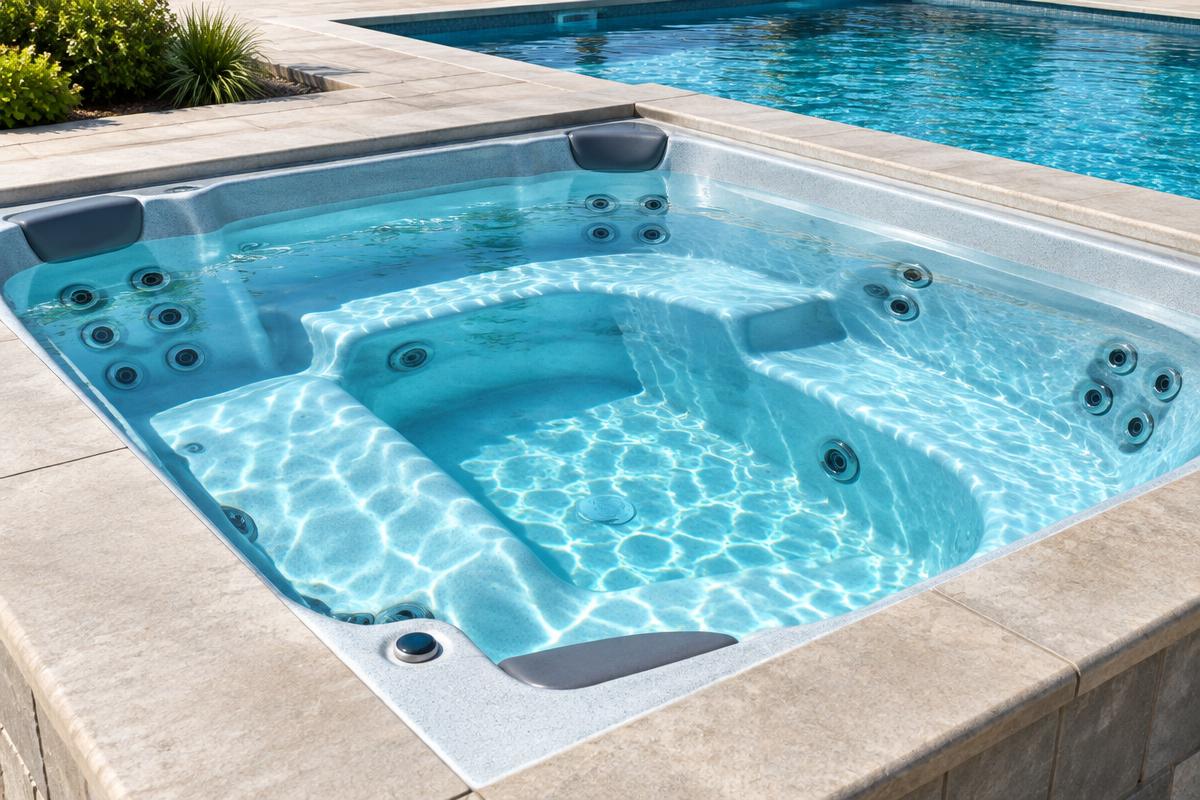
A connected spa can share filtration while operating at a different temperature and with different patterns of use. Spillways, fountains and other features can also affect circulation and treatment demand. Explain which features run automatically and which are used only occasionally. Inspect accessible surfaces visually and report missing drain covers or other apparent safety defects without entering the water. A maintenance provider needs the real hydraulic arrangement; the presence of a community spa elsewhere says nothing about the plumbing in a private backyard.
Property details to confirm
After a busy gathering, communicate unusual use and any water-quality change instead of improvising large chemical additions. Keep children and pets away from chemicals and equipment controls. Do not rely on clear-looking water as proof that a warm spa is ready for use. Follow applicable operating guidance and manufacturer instructions. These are broad care cautions, not a claim about local bathing patterns, a promise of immediate post-party visits or a statement that a standard recurring package automatically includes every water feature.
Explore services for your pool
- Pool Cleaning
- Residential Pool Cleaning
- Weekly Pool Service
- Green to Clean
- Hot Tub & Spa Service
- Pool Tile Cleaning
- Pool Filter Cleaning
- Pool Sand Replacement
- Pool Opening
- Commercial Pool Cleaning
- Gym & Health Club Pool Cleaning
- HOA Pool Cleaning
- Hospitality Pool Cleaning
- Pool Builder Services
- Pool Automation
- Saltwater Pool Systems
- Salt Cell Service
- Pool Equipment Repair
- Pool Pump Repair
- Pool Filter Repair
- Pool Heater Repair
- Pool Equipment Installation
- Pool Pump Installation
- Pool Filter Installation
- Pool Heater Installation
Private backyard care and shared-facility care differ
A household pool and an association or other shared-use aquatic facility should not be placed on the same plan merely because they are nearby. commercial pool cleaning inquiries need a review of the facility's use, operator responsibilities, applicable public-health requirements, testing documentation and equipment. A residential starting price is not a commercial proposal. An owner or manager should identify who can authorize work, who maintains operational records and how a safety concern is escalated. Public descriptions of amenities do not establish who currently maintains them.
Property details to confirm
For a homeowner, residential-pool cleaning should focus on that property's pool and any connected spa. For an association manager, request a separate assessment and written commercial scope. Never infer that Sharkey's has a community contract, municipal endorsement or existing customers from the presence of a local information page. Shared recreation facilities are mentioned only as verified context. Appropriate permissions and a defined responsibility chain matter more than proximity when arranging work around swimmers, staff and restricted equipment areas.
Need help with your pool in The Farm? Discuss your property with Sharkey’s.
Read the water before changing the treatment
Clear water is not a complete chemical assessment. A useful evaluation separates sanitizer, pH, alkalinity, calcium hardness and stabilizer, then considers the finish, water temperature and equipment instructions. Those readings answer different questions: whether disinfectant is available, whether water is becoming corrosive or scale-forming, and whether the sanitizer strategy fits outdoor exposure. One extra dose cannot reliably correct every imbalance. Record results before making changes, and allow the specified circulation time before retesting. This is general pool-care guidance, not a claim that a particular neighborhood has unusual water chemistry.
Property details to confirm
Bring any recent test results and a list of products already added when discussing residential-pool cleaning. Avoid mixing chemicals or combining different products in a feeder. Follow product labels and equipment instructions rather than a neighbor's dosage. A technician needs the actual pool volume and treatment history; a housing tract name cannot supply either. Tell the provider about a connected spa, automatic cover or alternative sanitizer because those details change the assessment.
Plan a green-to-clean recovery in stages
A green pool needs diagnosis before a promise about recovery time. Algae, suspended debris and some metal-related discoloration can look similar from the deck. Establish whether the circulation equipment works, whether the bottom is visible, and what chemicals have already been applied. Keep swimmers out while water quality and visibility are unsafe or uncertain. A green to clean discussion should cover testing, debris removal, treatment, circulation and filter follow-up, with progress judged by measured results rather than a guaranteed number of visits.
Property details to confirm
Do not treat a full drain as the default cure. Ground conditions, the pool shell, finish requirements and lawful discharge options all matter. Recovery also does not repair a failed pump or a damaged filter. Ask which conditions must be corrected before ongoing maintenance can stabilize the water. Share photographs from a safe location, without leaning over questionable decking. This is a general recovery framework; the community's name alone does not establish an algae outbreak, contamination event or drainage permission.
Match filter cleaning to the equipment
A filter that looks ordinary from the outside can contain cartridges, a sand bed or diatomaceous-earth grids. These designs do not share one cleaning procedure. Start with the make, model, pressure gauge condition and a known clean operating pressure at the normal pump speed. A pressure change can indicate loading, but poor suction or trapped air may point elsewhere. pool filter cleaning should be discussed as a specific task, not assumed to be included in every recurring visit or automatically necessary on a fixed neighborhood calendar.
Property details to confirm
Before opening a filter, the system must be shut down, isolated from automatic restart and fully depressurized according to the manufacturer. Never loosen a clamp on a pressurized vessel. After cleaning, reassembly and restart need an appropriate leak and pressure check. Owners can help by keeping labels visible and preserving previous service notes. Ask what cleaning method, replacement media if applicable, and disposal approach will be used. This is general safety advice, not a local equipment requirement.
Starting price, flexible terms and a neighbor option
Sharkey's Pool Cleaning recurring service starts at $159 per month and is month-to-month. That is a starting point, not a universal quote for every pool, spa, recovery project or shared-use facility. Request a written description of the proposed recurring scope and ask which circumstances would require separate authorization. green to clean work, pool filter cleaning, saltwater pool systems assessment and pool pump repair are useful service choices to discuss when relevant; mentioning them here does not establish that they are included in the starting monthly amount. No repair price or scheduling promise is offered on this page.
Compare scope, not just the starting amount
When three homes on the same cul-de-sac join the route, each saves 10% monthly. Coordinate with interested neighbors without circulating private gate credentials or making promises on their behalf. Confirm each property's scope and route arrangements directly with Sharkey's before relying on a shared plan. Homes elsewhere in the same subdivision should not assume they meet the same-cul-de-sac condition. Month-to-month service is a practical way to arrange ongoing care while keeping the agreement understandable. Ask questions about access, communication and separately approved tasks before enrollment, rather than treating a neighborhood information page as a finalized service contract.
What is included, and what needs a separate quote?
Monthly service starts at $159. This is a starting rate, not a promise that every listed task is included at that price. Your package and property-specific quote establish the work.
| Task | Service boundary |
|---|---|
| Testing, basic balancing, basket and equipment checks | Recurring care; scope confirmed in your package |
| Brush, skim and bottom cleaning | Package-dependent; not all included in Basic |
| Two salt-cell cleans per year | Included in Complete; otherwise discuss scope |
| Two D.E. / multi-cartridge filter cleans per year | Included in Complete; otherwise discuss scope |
| Repairs, installation, tile work and green recovery | Separately assessed and quoted |
Routine care or a specialty visit?
Your recurring care plan
- Water testing and basic chemical balancing
- Basket checks and equipment inspection
- Cleaning tasks in your agreed package
- Visit photo and pool report
Discuss a specialty visit
- Green-pool recovery and intensive cleanouts
- Equipment repairs and replacements
- Tile cleaning and sand replacement
- Filter or salt-cell work beyond package inclusions
Your chosen package determines inclusions. Complete includes two salt-cell cleans and two D.E. / multi-cartridge filter cleans per year. We confirm other work and pricing before you decide.
Debris & exposure in The Farm
Your pool’s own surroundings set the care needs. Tell us about nearby trees, open soil, wind exposure and whether your pool has a cover. After windy conditions, check baskets and surface debris; never assume every The Farm property has the same foliage or cleaning load.
Community context: The official POA lists 600 acres of common area, 38 acres of citrus groves, three pools, two spas, a catch-and-release pond, hiking trails and recreation facilities; amenities are for homeowners and guests. Local source
More neighborhood guides in Wildomar
A clearer record of pool care
Sharkey's sends a photo and pool report after every clean. This illustrative checklist is not a real customer visit or a promise of specific measured readings.
- Visit photo
- Water testing and notes
- Completed cleaning tasks
- Equipment observations
Your equipment quote checklist
- Pool type and approximate volume
- Equipment brand and model labels
- Current pressure and clean-filter baseline
- Error codes or changes in operation
- A safe exterior equipment photo
- Last cleaning or repair date, if known
- Property address and access requirements
- Preferred service and scheduling questions
Do not open electrical or gas equipment. Do not include gate codes in public messages.
Water testing in The Farm: start with your actual pool
Dissolved calcium and magnesium contribute to water hardness and scale. Evaporation leaves minerals behind, but a city or neighborhood name does not establish your tap-water hardness. Check your water provider’s current report and test the pool itself before choosing treatment.
Weather is context, not a chemical reading
Sunlight, rain and debris can change water conditions. Routine sanitizer and pH checks matter even when the water looks clear. Follow your equipment and product instructions rather than dosing from a weather forecast.
EMWD’s report applies to its supply, not automatically to every address in our service areas.
Local community resources
- The Farm POA: amenities
The official POA lists 600 acres of common area, 38 acres of citrus groves, three pools, two spas, a catch-and-release pond, hiking trails and recreation facilities; amenities are for homeowners and guests.
Community links provide local context. Sharkey’s is an independent pool service business; these links do not imply an HOA, city or developer affiliation. Property access and service availability are confirmed with your quote.