What does hoa pool cleaning in Greer Ranch involve?
HOA pool care begins with the association's actual pool facilities, vendor requirements and approved access procedures. A neighborhood name does not establish a contract with Sharkey's. Shared public pools need an operator-specific maintenance plan and applicable county guidance; scope and board responsibilities are confirmed before scheduling.
- How much does hoa pool cleaning in Greer Ranch cost?
- HOA Pool Cleaning is quoted for the actual equipment, water condition and work required; no fixed specialty rate is advertised here. The $159 monthly starting price applies to recurring pool care, not automatically to this service. Request an assessment and a clear scope and price before deciding.
- Can Sharkey's service my property in Greer Ranch?
- Sharkey's lists Temecula, Murrieta, Wildomar, Winchester, Menifee, Canyon Lake, French Valley as service areas. Share your full address and access arrangements to confirm availability and a route day. A city or subdivision guide is not proof of an existing customer, HOA contract or guaranteed service at every address.
- What should I send for a hoa pool cleaning quote?
- Start with your pool type, requested service and city. Include your address, current water condition, equipment model numbers and relevant photos when available. Sharkey's confirms access, scheduling and the work for your property before you agree. Do not open unsafe equipment to obtain a photograph.
Your pool service guide for Greer Ranch
An HOA pool serves a community, but decisions about its care often pass through several people. Board members, community managers, maintenance staff, and residents need clear information without confusion over who authorizes work. Sharkey's Pool Cleaning serves Temecula, Murrieta, Wildomar, Winchester, Menifee, Canyon Lake, and French Valley. HOA pool cleaning is individually quoted as commercial service. A productive starting conversation covers the community's pool facilities, seasonal use, access procedures, recurring concerns, and approval process, helping management evaluate a proposed maintenance arrangement against the property's actual needs and responsibilities throughout the year. Greer Ranch homeowners requesting pool service can save time by preparing two sets of information: what the pool and equipment need, and how an authorized vendor can reach them. Sharkey’s Pool Cleaning can discuss recurring maintenance, water testing, control-system questions, and separately quoted repair or recovery work. Greer Ranch Community Association’s own website supplies the verified neighborhood context used here, including its gated setting and visitor-management information. None of that establishes Sharkey’s as an association contractor or guarantees admission. The maintenance recommendations below are general practical guidance rather than claims that the community’s hills create a particular pool problem. Each quote depends on the actual pool, equipment, responsibility for the work, and confirmed route and access arrangements.
HOA Pool Cleaning: planning a visit in Greer Ranch
Greer Ranch Community Association describes a 693-home gated community in Murrieta west of Interstate 215. It says homes are situated among 550 acres and describes private parks and recreation facilities. Those details support the neighborhood’s identity, but the terrain and acreage do not prove a particular wind exposure, dust level, or chemical demand at an individual pool. Tell the estimator what you observe at your property rather than relying on neighborhood-wide assumptions about debris or circulation needs.
Your property, not a neighborhood assumption
A community name does not establish your pool’s equipment, HOA membership, gate arrangements or service price. Include your full street address, whether the pool is private or shared, and the specific work you want. Sharkey’s confirms coverage, access and scope for the actual property before scheduling; a local guide is not a claim of an existing HOA contract.
Is the request for a private pool or a shared HOA facility?
A home inside an HOA and the association’s shared recreation pool are different service situations. Confirm which one is being quoted before discussing maintenance. For a common facility, identify the owner or managing entity, the authorized decision maker, all pools and spas involved, and the staff or volunteers who currently handle daily observations. Do not assume that a neighborhood name means the provider maintains its community amenities.
Ask management for relevant operating records, equipment information, and any facility-specific requirements or inspection correspondence. Who verifies applicable public-pool obligations, keeps required records, and decides when an unsafe condition calls for closure? The proposed agreement should allocate responsibilities explicitly. A cleaning contractor’s visit does not replace every operational duty, and an association setting does not by itself establish the facility’s precise regulatory classification.
Confirm contractor access to locked equipment rooms and the route for supplies without sharing credentials publicly. Are deliveries, noisy work, or temporary closures subject to board approval or posted resident notices? Establish who can authorize urgent repairs and how spending approval works outside office hours. For private backyard pools, ask only about restrictions that actually apply to the lot and proposed work. Rules governing discharge, equipment placement, or access should be verified from current property documents rather than attributed to the entire neighborhood.

Your pool. A clear next step.
Prepare your HOA pool service request in Greer Ranch
Share board requirements, pool rules and approved vendor access procedures. Request a property-specific quote in Greer Ranch; availability and scope are confirmed before scheduling.
No payment to request a quote. Work and pricing are agreed before you decide.
Define Responsibilities Before Comparing Quotes
Begin with a simple responsibility map for the community pool. Identify who oversees routine operations, who receives service information, who authorizes extra work, and who responds to resident concerns. In some communities those roles belong to one manager; in others they are divided among a board, management company, and onsite staff. Avoid requiring the service provider to infer authority from whoever happens to call. Clear contacts help prevent delayed approvals and conflicting instructions, especially when a concern involves a possible closure, equipment repair, or work outside the agreed cleaning scope.
Boards should also distinguish the pool-cleaning agreement from broader responsibilities for gates, deck conditions, supervision policies, furnishings, and building systems. A clean pool does not establish that every surrounding feature is safe or that all operating obligations have been met. Ask what observations the provider may report and which concerns need another qualified professional. Put these boundaries into the service discussion rather than relying on general language such as complete pool care. A precise scope protects the community from assuming that important tasks are covered when they have not been addressed.
Explore services for your pool
- Pool Cleaning
- Residential Pool Cleaning
- Weekly Pool Service
- Green to Clean
- Hot Tub & Spa Service
- Pool Tile Cleaning
- Pool Filter Cleaning
- Pool Sand Replacement
- Pool Opening
- Commercial Pool Cleaning
- Gym & Health Club Pool Cleaning
- HOA Pool Cleaning
- Hospitality Pool Cleaning
- Pool Builder Services
- Pool Automation
- Saltwater Pool Systems
- Salt Cell Service
- Pool Equipment Repair
- Pool Pump Repair
- Pool Filter Repair
- Pool Heater Repair
- Pool Equipment Installation
- Pool Pump Installation
- Pool Filter Installation
- Pool Heater Installation
Plan for Seasonal and Event-Driven Use
Community pool demand can change sharply with school breaks, warm weekends, resident gatherings, and changes in pool hours. Share those patterns when requesting a quote, including any scheduled activities or reservation system. Mention nearby landscaping, windblown debris, and whether the facility has separate pools or a spa. These details can affect maintenance planning even when the number of homes remains unchanged. Ask how the proposed scope could be reviewed if actual usage differs from initial expectations rather than assuming one arrangement will automatically suit every season and event.
If the community plans a seasonal opening or reopening after downtime, discuss the pool's condition early enough to identify unresolved equipment or water issues. Do not assume a routine cleaning visit alone establishes readiness for use. Management may need separate evaluations, records, or decisions based on the facility and applicable requirements. Share any history of recurring startup problems or lengthy shutdowns. Keeping opening preparation distinct from ongoing service helps the board understand potential additional work without treating an anticipated date as a promise that every prerequisite will be satisfied by then.
Need help with your pool in Greer Ranch? Discuss your property with Sharkey’s.
Use Reports to Support Board Oversight
Sharkey's Pool Cleaning provides a photo and report after every clean. For an HOA, discuss a primary recipient and an archive location so information remains available when board members or managers change. Service updates can support oversight by showing visible conditions and documenting the work described in the report. Ask what details are included rather than assuming the report covers every measurement or operating record the association may need. Management should maintain its own required documentation and avoid treating a service update as a certification of safety or compliance.
A concise internal summary can help boards separate routine maintenance from decisions requiring approval. Consider tracking open concerns, requested estimates, approved work, and unresolved questions in one place alongside service reports. This reduces the chance that a recommendation disappears between meetings or is mistaken for completed work. When residents raise an issue, record the date, location, and observable condition rather than circulating speculation. Consistent records make it easier to recognize repeated problems and explain decisions transparently without promising outcomes that depend on further assessment, parts, access, or separate professional work.
Handle Resident Concerns With Clear Questions
Resident reports about cloudiness, odors, debris, or visible staining are useful starting points, not diagnoses. Ask when the condition was noticed, whether it affected the entire pool, and whether it followed a busy period, weather event, or equipment interruption. Photos taken from an authorized safe location may help document a visible concern. Residents should not enter equipment areas, adjust controls, or add products. A designated reporting channel keeps observations organized and avoids multiple people issuing instructions to the service provider based on incomplete or contradictory information about the same event.
Management should distinguish appearance complaints from conditions that may require immediate restrictions under the community's operating procedures. Poor visibility, suspected contamination, damaged barriers, and electrical concerns should not wait for a routine board meeting or the next scheduled cleaning. Follow the association's established incident process and obtain appropriate professional guidance. A service provider's availability should not be assumed to be continuous or emergency-based. Clear resident messaging should explain what is known and what action management has taken without declaring the pool safe or announcing a reopening time before the necessary evaluation.
Prepare Access, Records, and Budget Questions
Before a site discussion, gather available equipment lists, recent repair history, prior service notes, and information about seasonal schedules. Arrange authorized entry through community gates and explain any vendor registration or access restrictions. Identify equipment areas that are shared with other amenities or controlled by a separate contractor. There is no need for volunteers or staff to dismantle equipment or investigate electrical components beforehand. Providing reliable background information and pointing out known concerns is a safer and more useful way to prepare for an assessment of the proposed service needs.
For budgeting, ask the proposal to distinguish recurring cleaning from separately authorized repairs, parts, filter-related work, and other potential additions. Commercial pricing requires an individual quote, so the residential recurring monthly starting price should not be used as an HOA budget allowance. Discuss how estimates would be requested and whether spending authority changes above a board-defined threshold. The association can then evaluate the proposal against its purchasing procedures. This approach supports clearer financial planning without expecting a cleaning agreement to absorb every future equipment failure or unanticipated maintenance problem.
Create Continuity Across Management Changes
HOA maintenance arrangements work better when important information belongs to the association rather than one individual's inbox. Keep approved scope documents, contact details, service reports, and outstanding work requests in an accessible management record. When a new board or management company takes over, review the existing responsibilities before changing instructions. Ask how communication preferences can be updated and confirm who currently has approval authority. Continuity reduces duplicated requests and helps the next decision-maker understand why a recommendation was made, whether it was approved, and whether further work remains under discussion.
Sharkey's Pool Cleaning offers month-to-month service, while the specific commercial scope, schedule, and billing details should be confirmed for your community. Before starting, review expectations for resident events, seasonal changes, reporting, and work outside routine cleaning. A useful agreement gives the board a clear basis for evaluating performance without relying on vague guarantees about perfect water or uninterrupted pool availability. Request an individual quote with a practical description of the property, its management structure, and current concerns so the conversation begins with the community's actual operating needs rather than assumptions.
A documented gated community, not a predicted pool condition
Greer Ranch Community Association describes a 693-home gated community in Murrieta west of Interstate 215. It says homes are situated among 550 acres and describes private parks and recreation facilities. Those details support the neighborhood’s identity, but the terrain and acreage do not prove a particular wind exposure, dust level, or chemical demand at an individual pool. Tell the estimator what you observe at your property rather than relying on neighborhood-wide assumptions about debris or circulation needs.
Community facilities are background only
The association also describes a five-person board and homeowner committees assisted by professional management. That governance context does not appoint Sharkey’s to any maintenance role or give a homeowner authority to approve work on shared equipment. When calling, distinguish a private backyard pool from a community-facility inquiry. If responsibility is unclear, check the property’s governing documents or ask the appropriate association contact sharkey's pool cleaning before authorizing work. No HOA contract, referral arrangement, endorsement, or existing customer relationship is asserted in this page.
Request a quote with a clear recurring-service scope
Sharkey’s Pool Cleaning offers recurring service starting at $159/month, with month-to-month service. That starting figure applies only to recurring service, not a repair, filter-cleaning appointment, green-water recovery, equipment upgrade, or commercial agreement. Call to describe the property and request a pool-specific estimate. Useful details include approximate pool size, an attached spa, sanitation equipment, water clarity, the most recent service date, and any known fault. Ask which tasks and supplies are covered and how work outside the recurring scope will be presented for approval.
Confirm the route and any neighbor offer
Route availability and access are confirmed when scheduling; a neighborhood page is not a promise of an existing route, a particular service day, or entry authorization. Three homes on the same cul-de-sac qualify for a 10% discount. If you are organizing that group, call with the three service addresses and ask how the discount will be applied to the proposed recurring arrangements. Do not assume the offer changes separately quoted repair or restoration prices. Each property still needs its own pool assessment, authorized contact sharkey's pool cleaning, and reliable access plan, even when neighbors coordinate their requests.
What is included, and what needs a separate quote?
Monthly service starts at $159. This is a starting rate, not a promise that every listed task is included at that price. Your package and property-specific quote establish the work.
| Task | Service boundary |
|---|---|
| Testing, basic balancing, basket and equipment checks | Recurring care; scope confirmed in your package |
| Brush, skim and bottom cleaning | Package-dependent; not all included in Basic |
| Two salt-cell cleans per year | Included in Complete; otherwise discuss scope |
| Two D.E. / multi-cartridge filter cleans per year | Included in Complete; otherwise discuss scope |
| Repairs, installation, tile work and green recovery | Separately assessed and quoted |
Riverside County public-pool responsibilities
Riverside County Environmental Health inspects public pools and spas, including routine unannounced inspections and complaint investigations. Public-pool operating requirements are distinct from a private backyard care plan. Facility managers should confirm applicable obligations and maintenance responsibilities rather than assume a cleaning agreement establishes compliance.
When a public pool needs to close
The county's self-inspection checklist lists hazards such as no free disinfectant residual, heavy algae, water too cloudy to see the bottom, damaged or missing main-drain covers, and broken or missing enclosures as closure conditions until corrected. Operators should consult current county guidance and never reopen based on appearance alone.
These official resources describe operator obligations; they do not imply county endorsement, an inspection certification or a guaranteed compliance outcome from Sharkey's.
Routine care or a specialty visit?
Your recurring care plan
- Water testing and basic chemical balancing
- Basket checks and equipment inspection
- Cleaning tasks in your agreed package
- Visit photo and pool report
Discuss a specialty visit
- Green-pool recovery and intensive cleanouts
- Equipment repairs and replacements
- Tile cleaning and sand replacement
- Filter or salt-cell work beyond package inclusions
Your chosen package determines inclusions. Complete includes two salt-cell cleans and two D.E. / multi-cartridge filter cleans per year. We confirm other work and pricing before you decide.
Debris & exposure in Greer Ranch
Your pool’s own surroundings set the care needs. Tell us about nearby trees, open soil, wind exposure and whether your pool has a cover. After windy conditions, check baskets and surface debris; never assume every Greer Ranch property has the same foliage or cleaning load.
Community context: Describes 693-home gated Murrieta community west of I-215, 550 acres, board/committees, and visitor system. Local source
More neighborhood guides in Murrieta
A clearer record of pool care
Sharkey's sends a photo and pool report after every clean. This illustrative checklist is not a real customer visit or a promise of specific measured readings.
- Visit photo
- Water testing and notes
- Completed cleaning tasks
- Equipment observations
Your equipment quote checklist
- Pool type and approximate volume
- Equipment brand and model labels
- Current pressure and clean-filter baseline
- Error codes or changes in operation
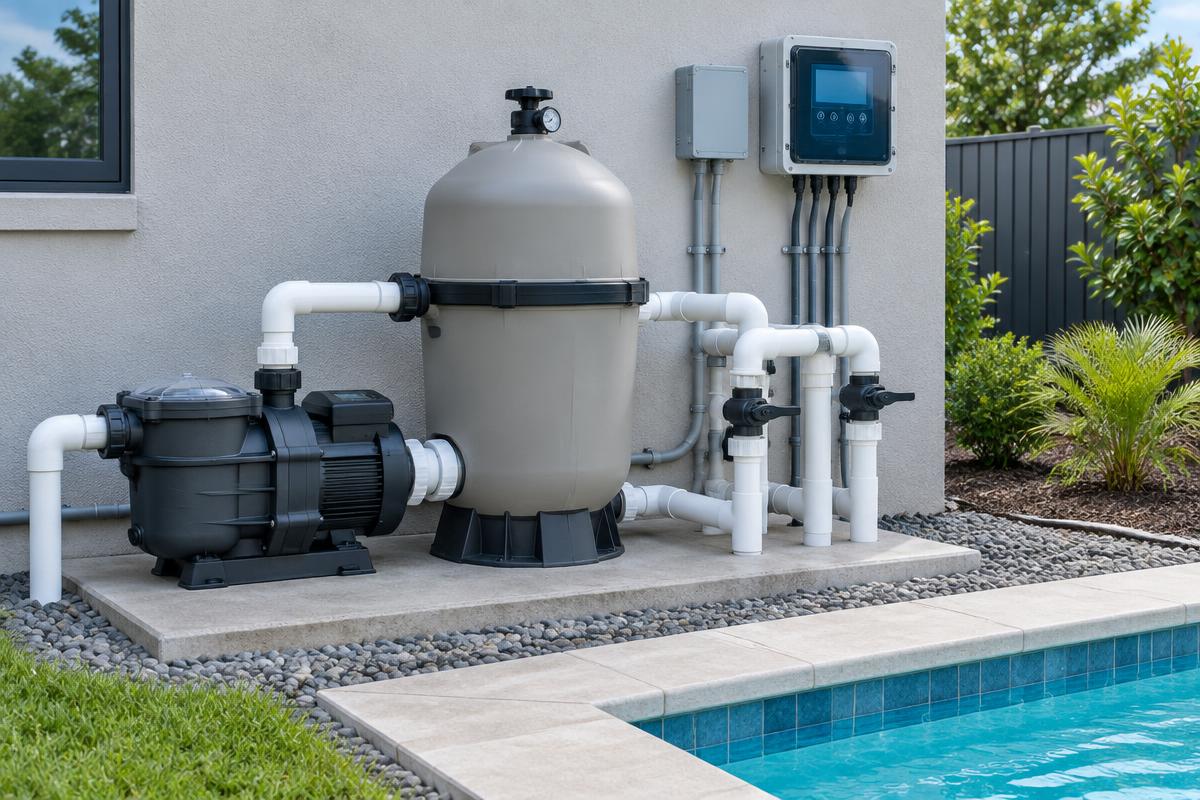
- A safe exterior equipment photo
- Last cleaning or repair date, if known
- Property address and access requirements
- Preferred service and scheduling questions
Do not open electrical or gas equipment. Do not include gate codes in public messages.
Water testing in Greer Ranch: start with your actual pool
Dissolved calcium and magnesium contribute to water hardness and scale. Evaporation leaves minerals behind, but a city or neighborhood name does not establish your tap-water hardness. Check your water provider’s current report and test the pool itself before choosing treatment.
Weather is context, not a chemical reading
Sunlight, rain and debris can change water conditions. Routine sanitizer and pH checks matter even when the water looks clear. Follow your equipment and product instructions rather than dosing from a weather forecast.
EMWD’s report applies to its supply, not automatically to every address in our service areas.
Local community resources
- Greer Ranch Community Association
Describes 693-home gated Murrieta community west of I-215, 550 acres, board/committees, and visitor system.
- Greer Ranch: contact and vendor information
Publishes vendor hours and emergency-only Sunday access guidance; verify current requirements and owner authorization.
Community links provide local context. Sharkey’s is an independent pool service business; these links do not imply an HOA, city or developer affiliation. Property access and service availability are confirmed with your quote.