What does saltwater pool systems in Canyon Lake involve?
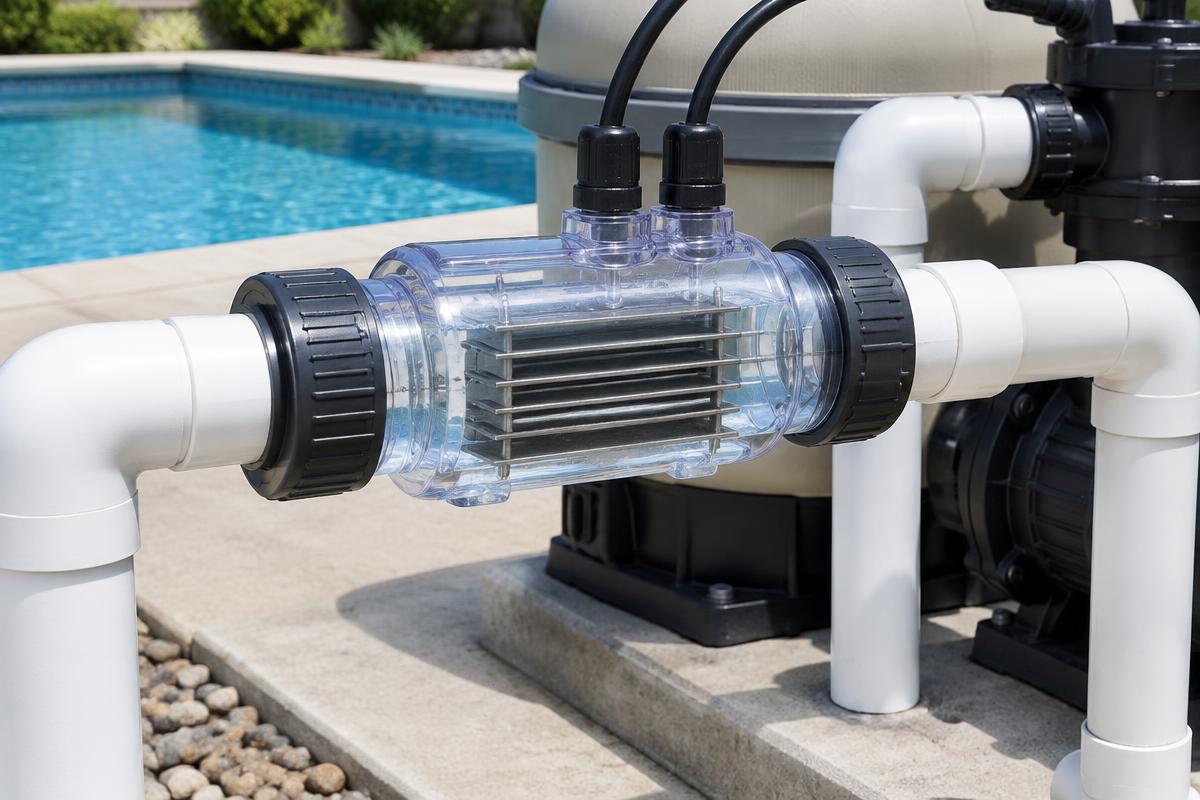
A saltwater pool system uses a compatible chlorine generator to produce sanitizer from dissolved salt. Cell sizing, water balance and existing equipment matter when planning a system. Share pool volume and equipment models; a salt system still requires water testing and routine cell inspection under manufacturer guidance.
- How much does saltwater pool systems in Canyon Lake cost?
- Saltwater Pool Systems is quoted for the actual equipment, water condition and work required; no fixed specialty rate is advertised here. The $159 monthly starting price applies to recurring pool care, not automatically to this service. Request an assessment and a clear scope and price before deciding.
- Can Sharkey's service my property in Canyon Lake?
- Sharkey's lists Temecula, Murrieta, Wildomar, Winchester, Menifee, Canyon Lake, French Valley as service areas. Share your full address and access arrangements to confirm availability and a route day. A city or subdivision guide is not proof of an existing customer, HOA contract or guaranteed service at every address.
- What should I send for a saltwater pool systems quote?
- Start with your pool type, requested service and city. Include your address, current water condition, equipment model numbers and relevant photos when available. Sharkey's confirms access, scheduling and the work for your property before you agree. Do not open unsafe equipment to obtain a photograph.
Your pool service guide for Canyon Lake
A saltwater pool still uses chlorine. Its salt chlorination system generates chlorine from dissolved salt rather than making the pool chlorine-free or maintenance-free. Understanding that distinction helps owners ask better questions about equipment, water balance, and recurring care. Sharkey's Pool Cleaning serves Temecula, Murrieta, Wildomar, Winchester, Menifee, Canyon Lake, and French Valley. Discuss existing equipment, concerns, and conversion goals before assuming a salt system is suitable for the property. Equipment-related pricing requires an individual quote, and any proposed installation, assessment, or service scope should be confirmed for the actual pool. Canyon Lake needs a service discussion that starts with authorized access. The official POA describes a privately gated community where residents manage guest access through GoAccess. The County of Riverside identifies Canyon Lake as an incorporated city that began as a master-planned community in 1968 and incorporated in 1990. This Sharkey's Pool Cleaning page covers the city and POA context without inventing separate neighborhoods from gates, coves or amenities.
Saltwater Pool Systems: planning a visit in Canyon Lake
The POA identifies Main Gate off Railroad Canyon Road, East Gate off Goetz Road and North Gate off Greenwald Avenue leading to Longhorn Drive. Commercial, oversize and recreational vehicles must use East or North gates; Main Gate does not admit commercial or oversized vehicles. A planned cleaning visit therefore requires coordination with the resident and current entry procedures. Sharkey's does not have automatic access, and no POA approval, standing vendor credential or existing customer relationship is claimed.
Your property, not a neighborhood assumption
A community name does not establish your pool’s equipment, HOA membership, gate arrangements or service price. Include your full street address, whether the pool is private or shared, and the specific work you want. Sharkey’s confirms coverage, access and scope for the actual property before scheduling; a local guide is not a claim of an existing HOA contract.
Is this pool suitable for the proposed salt system?
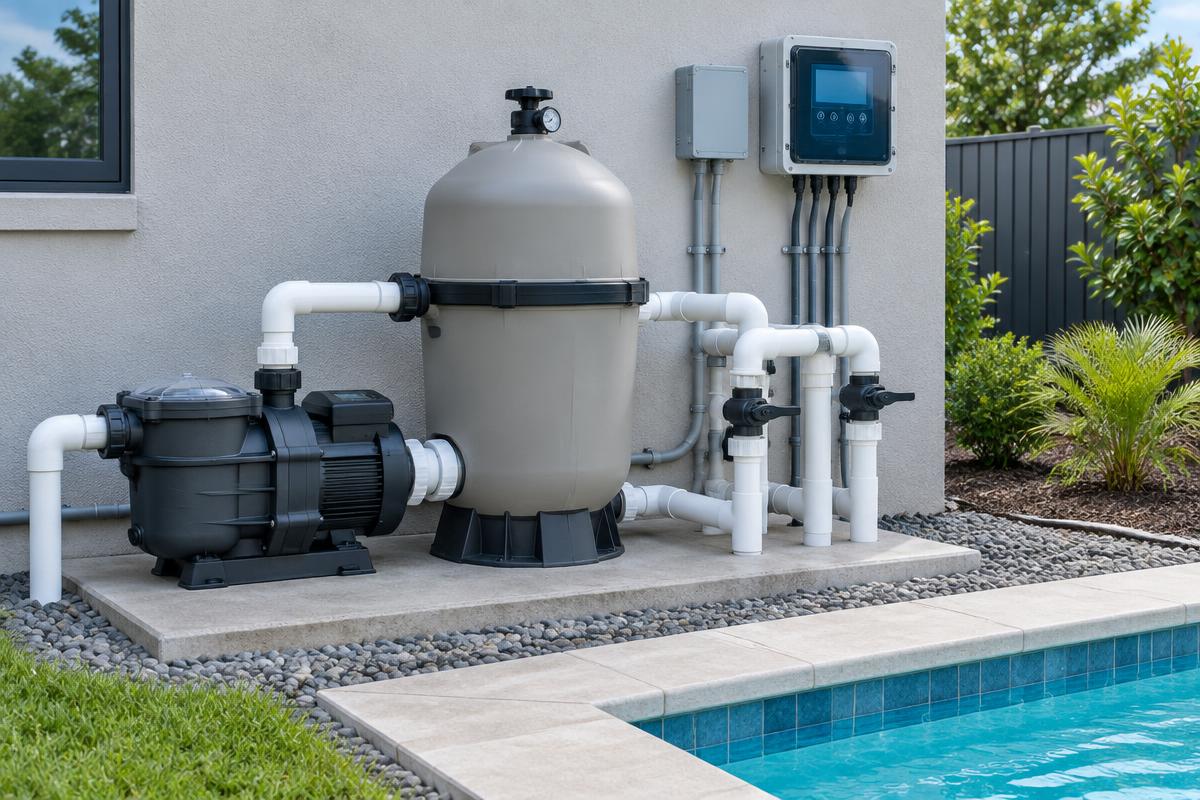
Start with the pool’s approximate volume, surface materials, equipment models, and current sanitation method. Is the request a new conversion, replacement of an existing generator, or help understanding current performance? A salt system produces sanitizer; it does not eliminate water testing or all other chemical adjustments. Appropriate sizing and operating settings depend on the actual pool, expected demand, and manufacturer guidance, not just the city in which it sits.
Ask how the proposed system fits available plumbing space, power supply, controls, and flow requirements. Existing heaters, metal features, stone, and other materials should be considered for compatibility using their manufacturers’ guidance. Report corrosion or deteriorating surfaces before installation, but do not assume salt caused every existing defect. Electrical connections and bonding questions need competent site assessment, and any applicable approval requirements should be confirmed for the work proposed.
If existing water needs adjustment, establish the current salt level with appropriate testing before adding salt. More is not automatically better, and controller readings may need investigation. Where dilution or water removal is considered, verify a permitted discharge arrangement and property restrictions first. Request a handover explaining normal readings, cell maintenance, warnings, and seasonal operating limits for the installed model. A neighborhood page should not promise universally suitable water, maintenance-free sanitation, or guaranteed compatibility without these checks.
Your pool. A clear next step.
Compare salt-system options for your pool in Canyon Lake
Include pool volume and current equipment before choosing a system. Request a property-specific quote in Canyon Lake; availability and scope are confirmed before scheduling.
No payment to request a quote. Work and pricing are agreed before you decide.
Understand What Salt Chlorination Does
A salt chlorination system uses an electrolytic cell to generate chlorine while operating under the conditions required by its design. That chlorine performs the familiar sanitation role associated with pool care. The system does not replace filtration, physical cleaning, or water assessment, and the presence of salt does not establish that the water is suitable for swimming. Discuss how the installed equipment is intended to operate and what ongoing observations are needed. This gives owners a more accurate expectation than descriptions suggesting that salt alone keeps a pool clean without attention.
Owners considering a conversion should separate personal preferences from technical requirements. Some people are interested in a different approach to chlorine delivery, while others want less manual handling of certain products. Neither preference establishes whether a particular system fits the pool. Ask about equipment compatibility, operating needs, maintenance obligations, and practical limitations. Salt chlorination should not be presented as a medical benefit or a guarantee against odor, irritation, algae, or water problems. Those outcomes can involve several conditions that still need appropriate assessment and management after a system is installed.
Explore services for your pool
- Pool Cleaning
- Residential Pool Cleaning
- Weekly Pool Service
- Green to Clean
- Hot Tub & Spa Service
- Pool Tile Cleaning
- Pool Filter Cleaning
- Pool Sand Replacement
- Pool Opening
- Commercial Pool Cleaning
- Gym & Health Club Pool Cleaning
- HOA Pool Cleaning
- Hospitality Pool Cleaning
- Pool Builder Services
- Pool Automation
- Saltwater Pool Systems
- Salt Cell Service
- Pool Equipment Repair
- Pool Pump Repair
- Pool Filter Repair
- Pool Heater Repair
- Pool Equipment Installation
- Pool Pump Installation
- Pool Filter Installation
- Pool Heater Installation
Evaluate the Existing Pool Before Conversion
A conversion discussion should consider the pool's equipment, surfaces, features, documented manufacturer requirements, and overall condition. Provide available information about pumps, controls, heaters, covers, and water features without opening equipment enclosures. Ask whether any materials or components require particular consideration before salt equipment is proposed. The answer depends on the actual installation, so avoid treating another homeowner's experience as proof of suitability. A useful evaluation also distinguishes preexisting corrosion, leaks, or surface concerns from the separate question of whether a proposed salt chlorination system is appropriate for the property.
System selection should reflect the pool's needs rather than relying on a single marketing description or assumed equipment capacity. Discuss usage patterns, environmental conditions, operating arrangements, and any automation that may need to communicate with the proposed system. Installation can involve electrical and plumbing responsibilities that require appropriately qualified professionals and a clearly defined agreement. No specific equipment brand or installation method should be assumed from a general inquiry. Ask what assessment is needed, who would perform each part of the work, and which compatibility findings could affect the final proposal.
Need help with your pool in Canyon Lake? Discuss your property with Sharkey’s.
Keep Water Balance and Routine Care in View
Salt systems do not make water balance optional. Sanitizer conditions, pH, and other relevant water characteristics still need evaluation in the context of the pool and equipment instructions. Salt concentration is only one part of that picture. A controller's status display is useful information, but it should not be treated as a complete water assessment. Discuss what routine care would include and how findings would be communicated. Avoid adding salt or other products based solely on a guess, a single symptom, or an assumption that more production solves every problem.
Physical maintenance remains important as well. Debris, dirty baskets, filter concerns, and circulation problems can affect the pool even when the salt equipment appears to be operating. Explain any patterns such as cloudiness after heavy use, debris accumulation, or repeated equipment alerts. Those observations help distinguish water-care questions from a possible cell or control issue. Sharkey's Pool Cleaning provides a photo and report after every clean; ask which water and equipment observations are included in your proposed arrangement. Recurring cleaning and specialized salt-equipment work should have clear boundaries rather than being assumed identical.
Ask Better Questions When Performance Changes
If chlorine generation seems inadequate, begin with a factual description rather than assuming the cell needs replacement. Note the displayed message, when the concern began, recent pool use, and whether the equipment has operated differently. Temperature conditions, circulation, water characteristics, settings, and component condition may all affect interpretation depending on the system. Share any recent equipment changes or service history. Do not bypass flow protections or force equipment to operate outside its normal controls. A careful assessment should consider the broader system before identifying a particular component as the cause.
Low or unusual salt indications also require context. A displayed reading may reflect more than the amount of salt physically present, depending on equipment design and conditions. Adding salt without verifying the situation can create another problem. Ask what observations and testing are appropriate before any adjustment is proposed. Likewise, a production indicator does not prove the pool has the sanitizer level it needs. Keep the distinction between equipment status and actual water condition clear, and follow the property's safety procedures when concerns could affect use rather than relying on the display alone.
Plan for Cell Care and Equipment Limitations
The salt cell is a serviceable component with care requirements determined by its design, condition, and manufacturer instructions. Mineral buildup may affect some cells, but not every performance concern is caused by scale. Ask whether inspection or cleaning is appropriate and whether other causes should be considered first. Cleaning should not be treated as an automatic cure or performed more aggressively simply because the equipment is older. Internal coatings and components can be damaged by unsuitable treatment, so owners should not improvise chemical cleaning or mechanical scraping to restore output.
If replacement is being considered, discuss compatibility, diagnostic findings, and whether controls or other components also need evaluation. A replacement cell does not resolve every circulation, wiring, configuration, or water-management issue. Ask what the quote includes and what assumptions it makes about the rest of the system. No universal service life or guaranteed output improvement should be promised without an appropriate basis. The salt-cell-service page explains the questions useful for a more focused conversation, especially when the owner is deciding between further assessment, appropriate cleaning, and a separately quoted replacement.
Get a Quote That Separates Equipment From Cleaning
Prepare the property location, accessible model information, pool-use pattern, current symptoms, and any conversion goals before requesting a quote. State whether the pool already has salt equipment or whether this would be a new arrangement. Equipment work requires individual pricing; residential recurring monthly starting prices are not conversion, repair, or replacement prices. Ask how the proposed scope addresses assessment, compatibility, equipment, installation responsibilities, and follow-up questions. A clear proposal makes it easier to understand which needs are being addressed and which remain outside the agreement or require another qualified professional.
For residential recurring cleaning, Sharkey's Pool Cleaning's monthly service starts at $159 and is month-to-month, with the actual property scope to be confirmed. Salt-equipment work should be discussed separately rather than assumed included at that starting price. Before approving any proposal, confirm responsibilities, exclusions, communication, and authorization for unexpected findings. A useful salt-system plan is realistic about continued maintenance and the fact that the pool still uses chlorine. It should help you understand the equipment and its limitations without promising chemical-free water, effortless ownership, or guaranteed protection from future problems.
Prepare safe property access without sharing credentials publicly
Agree on the correct entrance, the authorized contact sharkey's pool cleaning and how the equipment area can be reached without passing through locked living spaces. Keep pets secured and disclose gate latches that must be handled in a particular way. Do not post access codes, security details or absence schedules in public inquiry forms or neighborhood discussions. A technician should not have to improvise access or bypass a barrier. Confirm any association restrictions directly when they may affect a commercial vehicle, equipment replacement or work near shared property.
Property details to confirm
Make the path to the equipment pad usable and keep chemical storage out of the technician's working area. Mention uneven steps, slippery decking or other known hazards before a visit. Property access arrangements are separate from authorization for pool equipment repair, so identify both clearly. This is general visit preparation, not a statement that every neighborhood is gated or has vendor restrictions. Route availability and timing must be confirmed directly; no guaranteed service day, emergency response or automatic community entry is represented.
Starting price, flexible terms and a neighbor option
Sharkey's Pool Cleaning recurring service starts at $159 per month and is month-to-month. That is a starting point, not a universal quote for every pool, spa, recovery project or shared-use facility. Request a written description of the proposed recurring scope and ask which circumstances would require separate authorization. green to clean work, pool filter cleaning, saltwater pool systems assessment and pool pump repair are useful service choices to discuss when relevant; mentioning them here does not establish that they are included in the starting monthly amount. No repair price or scheduling promise is offered on this page.
Compare scope, not just the starting amount
When three homes on the same cul-de-sac join the route, each saves 10% monthly. Coordinate with interested neighbors without circulating private gate credentials or making promises on their behalf. Confirm each property's scope and route arrangements directly with Sharkey's before relying on a shared plan. Homes elsewhere in the same subdivision should not assume they meet the same-cul-de-sac condition. Month-to-month service is a practical way to arrange ongoing care while keeping the agreement understandable. Ask questions about access, communication and separately approved tasks before enrollment, rather than treating a neighborhood information page as a finalized service contract.
What is included, and what needs a separate quote?
Monthly service starts at $159. This is a starting rate, not a promise that every listed task is included at that price. Your package and property-specific quote establish the work.
| Task | Service boundary |
|---|---|
| Testing, basic balancing, basket and equipment checks | Recurring care; scope confirmed in your package |
| Brush, skim and bottom cleaning | Package-dependent; not all included in Basic |
| Two salt-cell cleans per year | Included in Complete; otherwise discuss scope |
| Two D.E. / multi-cartridge filter cleans per year | Included in Complete; otherwise discuss scope |
| Repairs, installation, tile work and green recovery | Separately assessed and quoted |
Routine care or a specialty visit?
Your recurring care plan
- Water testing and basic chemical balancing
- Basket checks and equipment inspection
- Cleaning tasks in your agreed package
- Visit photo and pool report
Discuss a specialty visit
- Green-pool recovery and intensive cleanouts
- Equipment repairs and replacements
- Tile cleaning and sand replacement
- Filter or salt-cell work beyond package inclusions
Your chosen package determines inclusions. Complete includes two salt-cell cleans and two D.E. / multi-cartridge filter cleans per year. We confirm other work and pricing before you decide.
A clearer record of pool care
Sharkey's sends a photo and pool report after every clean. This illustrative checklist is not a real customer visit or a promise of specific measured readings.
- Visit photo
- Water testing and notes
- Completed cleaning tasks
- Equipment observations
Your equipment quote checklist
- Pool type and approximate volume
- Equipment brand and model labels
- Current pressure and clean-filter baseline
- Error codes or changes in operation
- A safe exterior equipment photo
- Last cleaning or repair date, if known
- Property address and access requirements
- Preferred service and scheduling questions
Do not open electrical or gas equipment. Do not include gate codes in public messages.
Water testing in Canyon Lake: start with your actual pool
Dissolved calcium and magnesium contribute to water hardness and scale. Evaporation leaves minerals behind, but a city or neighborhood name does not establish your tap-water hardness. Check your water provider’s current report and test the pool itself before choosing treatment.
Weather is context, not a chemical reading
Sunlight, rain and debris can change water conditions. Routine sanitizer and pH checks matter even when the water looks clear. Follow your equipment and product instructions rather than dosing from a weather forecast.
EMWD’s report applies to its supply, not automatically to every address in our service areas.
Local community resources
- Canyon Lake POA: community access
The POA identifies a privately gated community, resident-managed guest access through GoAccess, and Main, East and North gates. Commercial, oversize and recreational vehicles must use East or North gates; Main Gate is off Railroad Canyon Road, East Gate off Goetz Road, and North Gate off Greenwald Avenue leading to Longhorn Drive.
- Canyon Lake POA: association living
The POA describes private roads, parks, beaches, golf and other amenities; it does not own the lake but leases recreational privileges from EVMWD. Gates and amenities are not neighborhood designations.
- County of Riverside: cities
The county identifies Canyon Lake as an incorporated city that began as a master-planned community in 1968 and incorporated in 1990.
Community links provide local context. Sharkey’s is an independent pool service business; these links do not imply an HOA, city or developer affiliation. Property access and service availability are confirmed with your quote.