What does pool tile cleaning in Canyon Lake involve?
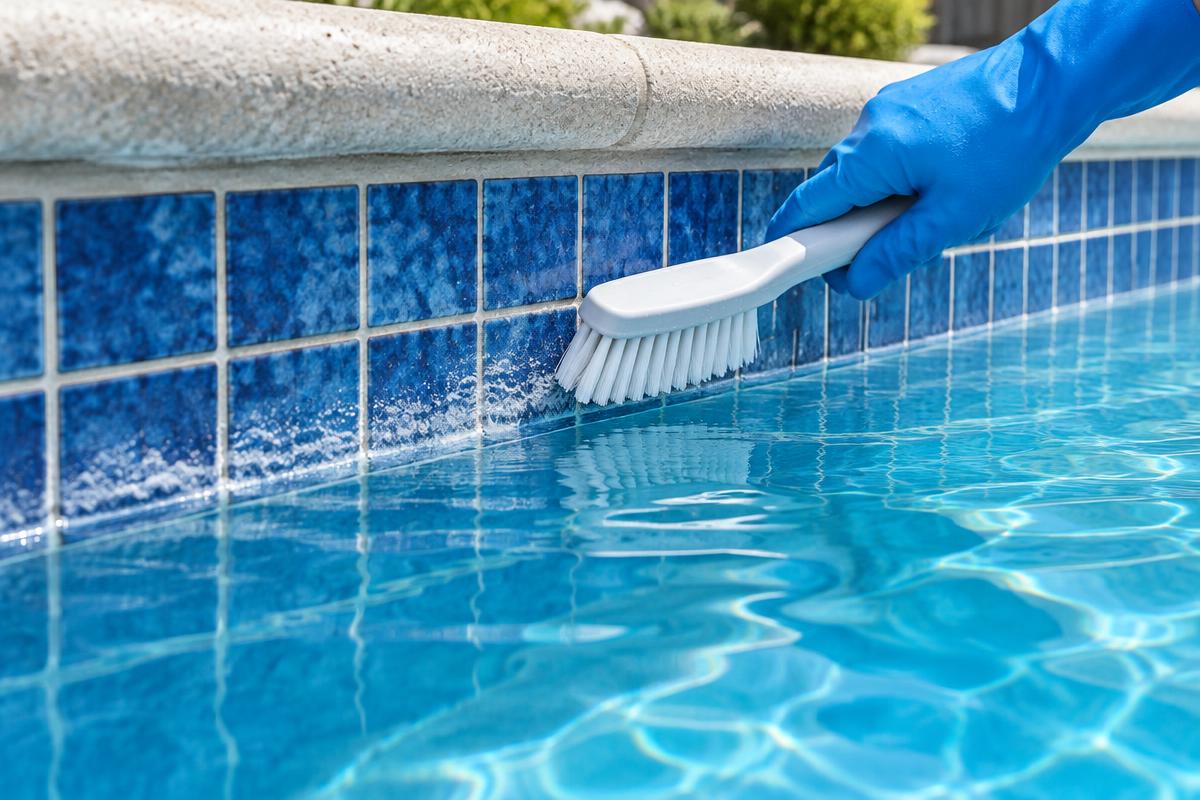
Pool tile cleaning starts by identifying the tile material and whether the waterline marks are deposits, staining or damage. The cleaning method must suit the surface. Send a close-up photo for assessment; do not assume every white mark needs aggressive abrasion or an acid treatment.
- How much does pool tile cleaning in Canyon Lake cost?
- Pool Tile Cleaning is quoted for the actual equipment, water condition and work required; no fixed specialty rate is advertised here. The $159 monthly starting price applies to recurring pool care, not automatically to this service. Request an assessment and a clear scope and price before deciding.
- Can Sharkey's service my property in Canyon Lake?
- Sharkey's lists Temecula, Murrieta, Wildomar, Winchester, Menifee, Canyon Lake, French Valley as service areas. Share your full address and access arrangements to confirm availability and a route day. A city or subdivision guide is not proof of an existing customer, HOA contract or guaranteed service at every address.
- What should I send for a pool tile cleaning quote?
- Start with your pool type, requested service and city. Include your address, current water condition, equipment model numbers and relevant photos when available. Sharkey's confirms access, scheduling and the work for your property before you agree. Do not open unsafe equipment to obtain a photograph.
Your pool service guide for Canyon Lake
A stubborn waterline can make an otherwise appealing pool look neglected. Pale deposits, dark residue, and uneven discoloration may look similar from the patio, but they do not always represent the same problem. Pool tile cleaning begins with understanding the tile, the buildup, and the condition of the surrounding grout and finish. Sharkey's Pool Cleaning provides personalized quotes for this non-recurring service, helping homeowners discuss the affected areas and realistic goals without assuming every mark is removable or that one approach suits every pool surface. Canyon Lake needs a service discussion that starts with authorized access. The official POA describes a privately gated community where residents manage guest access through GoAccess. The County of Riverside identifies Canyon Lake as an incorporated city that began as a master-planned community in 1968 and incorporated in 1990. This Sharkey's Pool Cleaning page covers the city and POA context without inventing separate neighborhoods from gates, coves or amenities.
Pool Tile Cleaning: planning a visit in Canyon Lake
The POA identifies Main Gate off Railroad Canyon Road, East Gate off Goetz Road and North Gate off Greenwald Avenue leading to Longhorn Drive. Commercial, oversize and recreational vehicles must use East or North gates; Main Gate does not admit commercial or oversized vehicles. A planned cleaning visit therefore requires coordination with the resident and current entry procedures. Sharkey's does not have automatic access, and no POA approval, standing vendor credential or existing customer relationship is claimed.
Your property, not a neighborhood assumption
A community name does not establish your pool’s equipment, HOA membership, gate arrangements or service price. Include your full street address, whether the pool is private or shared, and the specific work you want. Sharkey’s confirms coverage, access and scope for the actual property before scheduling; a local guide is not a claim of an existing HOA contract.
Which tile and surrounding surfaces will be treated?
Before selecting a cleaning method, identify whether the waterline is ceramic tile, glass tile, natural stone, or another material. Is the white deposit sitting on the surface, or are there damaged grout joints, etched areas, or loose pieces? Send close photographs and describe previous treatments, but expect the material and condition to be checked in person. Not every pale mark is removable scale, and aggressive cleaning can damage sensitive finishes.
Ask whether a small test area is appropriate and how adjacent plaster, metal fittings, coping, and landscaping will be protected. Access around the entire perimeter matters: a raised bond beam, narrow side yard, or water feature can change the practical scope. Identify where hoses and equipment can be positioned without blocking shared paths or damaging irrigation. If a particular method creates noise or dust, confirm any applicable association or property restrictions rather than assuming neighborhood-wide permission.
Some work may require lowering the water, but that decision should follow the proposed method and site assessment. Confirm how displaced water and cleaning residue will be contained or disposed of, and who verifies the discharge requirements. Ask what finish variations or existing defects may remain afterward. Tile cleaning cannot promise to stop future deposits without understanding the water chemistry and sources of recurring buildup.
Your pool. A clear next step.
Get a tile-cleaning assessment in Canyon Lake
Share a close-up of the waterline and tell us your tile material. Request a property-specific quote in Canyon Lake; availability and scope are confirmed before scheduling.
No payment to request a quote. Work and pricing are agreed before you decide.
Distinguish Deposits From Stains and Surface Damage
“Is that calcium or just a dirty waterline?” is one of the first questions homeowners ask. A pale, crusty-looking band may suggest mineral buildup, while other residue may have a different explanation. Appearance alone is not enough to identify every deposit or choose a treatment. Describe its color, texture as already observed, and location without scraping it to investigate. Tell the team whether it follows the waterline, appears around spillways, or affects isolated areas. Those details help organize an assessment and avoid treating every visible mark as the same kind of cleaning problem.
Some apparent staining may involve the tile's finish, weathering, damaged grout, or an underlying surface condition rather than material sitting on top. Cleaning should not be confused with repairing cracked tile or restoring a deteriorated glaze. If you know the tile's history, mention previous cleaning, repairs, or changes in appearance. Older photos may help show what has changed. Ask which areas appear suitable for cleaning and which need a separate repair discussion. A realistic distinction protects the conversation from a blanket expectation that all visible variation will disappear once the waterline has been addressed by a service.
Explore services for your pool
- Pool Cleaning
- Residential Pool Cleaning
- Weekly Pool Service
- Green to Clean
- Hot Tub & Spa Service
- Pool Tile Cleaning
- Pool Filter Cleaning
- Pool Sand Replacement
- Pool Opening
- Commercial Pool Cleaning
- Gym & Health Club Pool Cleaning
- HOA Pool Cleaning
- Hospitality Pool Cleaning
- Pool Builder Services
- Pool Automation
- Saltwater Pool Systems
- Salt Cell Service
- Pool Equipment Repair
- Pool Pump Repair
- Pool Filter Repair
- Pool Heater Repair
- Pool Equipment Installation
- Pool Pump Installation
- Pool Filter Installation
- Pool Heater Installation
Match the Scope to the Actual Tile Areas
Pool tile can extend beyond the main waterline. An attached spa, raised wall, spillway, steps, or decorative feature may have separate buildup and access needs. When requesting a quote, show all the areas you want considered rather than assuming that “tile cleaning” means every tiled surface on the property. Wide photos provide context, while closer images can show the appearance of deposits. Mention areas that stay submerged or are difficult to reach. A clearly defined scope helps distinguish the primary project from additional surfaces that may require different consideration because of their location or material.
“Can you clean the grout too?” should be discussed as part of that scope. Grout may have deposits, staining, missing sections, or deterioration, and those conditions are not interchangeable. Likewise, nearby natural stone, coping, sealants, or decorative finishes may affect how the work is evaluated. Identify any material you know, but do not guess if records are unavailable. Ask how adjacent surfaces influence the proposed approach and where cleaning ends and repair begins. This is more useful than selecting a method first and assuming every material around the pool can tolerate it in the same way.
Need help with your pool in Canyon Lake? Discuss your property with Sharkey’s.
Set a Realistic Goal for the Finished Appearance
The most useful goal is improvement appropriate to the surface's condition, not an unsupported promise that older tile will look newly installed. Deposits can hide existing wear, and cleaning may reveal variations that were less noticeable before. Ask what limitations are visible during assessment and what uncertainty remains beneath the buildup. If preserving a decorative finish is especially important, say so at the beginning. Your priorities help frame the discussion, but they do not make an unsuitable surface suitable for aggressive treatment. An honest recommendation should distinguish likely deposit removal from changes that cleaning may not resolve.
Ask whether a small-area evaluation is appropriate before proceeding with a larger section, especially when the tile material or condition is uncertain. Do not attempt your own test with harsh chemicals, scraping tools, or abrasive equipment. A mark that resists household cleaning is not proof that greater force is the right answer. Photographs can document the starting condition, but they cannot establish exactly how a finish will respond. The assessment should guide expectations and the service decision, particularly where tile is chipped, grout is loose, or previous work has left an uneven surface around the affected area.
Prepare for the Visit Without Altering the Surface
Before the visit, keep access around the affected pool edge clear and identify any unstable decking, delicate landscaping, or nearby items that could complicate the work area. Secure pets and explain gate arrangements. Share available information about the tile, past treatments, and any known repairs. Do not lower the water, scrape deposits, or apply products simply to make the job easier unless the appropriate preparation has been specifically discussed. The current condition is useful assessment information. Altering it in advance may create a new issue or make the original concern harder to evaluate accurately.
“Will the water level need to change?” is a scope question rather than a preparation instruction. The answer depends on the pool, affected areas, and proposed work. Ask whether any water management is part of the quote and what decisions are needed beforehand. Also mention an attached spa or water feature that changes where deposits appear. There is no need to operate unfamiliar valves to demonstrate the problem. Clear photographs and a description of normal use can begin the conversation while leaving equipment adjustments and any project-specific preparation to an appropriately evaluated plan for the property.
Understand Why Buildup Can Return
Tile cleaning addresses existing buildup within the agreed scope; it does not by itself eliminate every condition associated with future deposits. Water characteristics, changing water levels, splash patterns, and surface exposure can all be relevant considerations. Ask whether the location of the buildup suggests something worth reviewing as part of ongoing pool care. Avoid expecting a cleaning service to make tile permanently maintenance-free. The useful distinction is between removing the current deposit and managing the pool afterward, with each conversation grounded in the actual property rather than a promise that the same mark can never return.
If deposits repeatedly concentrate around a spillway or one section of the waterline, photograph the pattern and mention how quickly you notice it returning. That history may be more useful than simply describing the entire pool as scaled. It can also help separate a localized concern from a broader water-care discussion. Do not respond by changing chemistry on your own based only on the tile's appearance. Surface buildup is one observation among several. Ask what should be assessed and whether ongoing care needs a separate review, without assuming that more frequent tile cleaning is automatically the only reasonable next step.
Request a Quote That Separates Cleaning From Repairs
Sharkey's provides personalized quotes for non-recurring tile cleaning. To make the request useful, include wide and close photos, identify every area you want considered, and mention cracked tile, missing grout, or uncertain material. Ask what the quote covers and which findings could require a separate decision. Cleaning should not silently expand into tile replacement, coping work, or surface restoration. Those are different concerns. Reports and photos after every clean provide a record to review, but the service agreement should already make clear which surfaces and types of buildup are included in the requested project.
Whether your pool is in Canyon Lake, Temecula, or another community Sharkey's serves, start with the visible concern rather than a preferred cleaning method. “Can this band be removed without treating the whole pool?” and “Is this damage rather than buildup?” are useful questions. A defined assessment can help separate cosmetic improvement from repair needs and set expectations for older materials. Tile cleaning is not covered by an equipment warranty, and the Original No Green Guarantee should not be read as a guarantee against mineral deposits. Keeping those distinctions clear makes the project easier to evaluate on its own merits.
Prepare safe property access without sharing credentials publicly
Agree on the correct entrance, the authorized contact sharkey's pool cleaning and how the equipment area can be reached without passing through locked living spaces. Keep pets secured and disclose gate latches that must be handled in a particular way. Do not post access codes, security details or absence schedules in public inquiry forms or neighborhood discussions. A technician should not have to improvise access or bypass a barrier. Confirm any association restrictions directly when they may affect a commercial vehicle, equipment replacement or work near shared property.
Property details to confirm
Make the path to the equipment pad usable and keep chemical storage out of the technician's working area. Mention uneven steps, slippery decking or other known hazards before a visit. Property access arrangements are separate from authorization for pool equipment repair, so identify both clearly. This is general visit preparation, not a statement that every neighborhood is gated or has vendor restrictions. Route availability and timing must be confirmed directly; no guaranteed service day, emergency response or automatic community entry is represented.
Starting price, flexible terms and a neighbor option
Sharkey's Pool Cleaning recurring service starts at $159 per month and is month-to-month. That is a starting point, not a universal quote for every pool, spa, recovery project or shared-use facility. Request a written description of the proposed recurring scope and ask which circumstances would require separate authorization. green to clean work, pool filter cleaning, saltwater pool systems assessment and pool pump repair are useful service choices to discuss when relevant; mentioning them here does not establish that they are included in the starting monthly amount. No repair price or scheduling promise is offered on this page.
Compare scope, not just the starting amount
When three homes on the same cul-de-sac join the route, each saves 10% monthly. Coordinate with interested neighbors without circulating private gate credentials or making promises on their behalf. Confirm each property's scope and route arrangements directly with Sharkey's before relying on a shared plan. Homes elsewhere in the same subdivision should not assume they meet the same-cul-de-sac condition. Month-to-month service is a practical way to arrange ongoing care while keeping the agreement understandable. Ask questions about access, communication and separately approved tasks before enrollment, rather than treating a neighborhood information page as a finalized service contract.
What is included, and what needs a separate quote?
Monthly service starts at $159. This is a starting rate, not a promise that every listed task is included at that price. Your package and property-specific quote establish the work.
| Task | Service boundary |
|---|---|
| Testing, basic balancing, basket and equipment checks | Recurring care; scope confirmed in your package |
| Brush, skim and bottom cleaning | Package-dependent; not all included in Basic |
| Two salt-cell cleans per year | Included in Complete; otherwise discuss scope |
| Two D.E. / multi-cartridge filter cleans per year | Included in Complete; otherwise discuss scope |
| Repairs, installation, tile work and green recovery | Separately assessed and quoted |
Routine care or a specialty visit?
Your recurring care plan
- Water testing and basic chemical balancing
- Basket checks and equipment inspection
- Cleaning tasks in your agreed package
- Visit photo and pool report
Discuss a specialty visit
- Green-pool recovery and intensive cleanouts
- Equipment repairs and replacements
- Tile cleaning and sand replacement
- Filter or salt-cell work beyond package inclusions
Your chosen package determines inclusions. Complete includes two salt-cell cleans and two D.E. / multi-cartridge filter cleans per year. We confirm other work and pricing before you decide.
A clearer record of pool care
Sharkey's sends a photo and pool report after every clean. This illustrative checklist is not a real customer visit or a promise of specific measured readings.
- Visit photo
- Water testing and notes
- Completed cleaning tasks
- Equipment observations
Your equipment quote checklist
- Pool type and approximate volume
- Equipment brand and model labels
- Current pressure and clean-filter baseline
- Error codes or changes in operation
- A safe exterior equipment photo
- Last cleaning or repair date, if known
- Property address and access requirements
- Preferred service and scheduling questions
Do not open electrical or gas equipment. Do not include gate codes in public messages.
Water testing in Canyon Lake: start with your actual pool
Dissolved calcium and magnesium contribute to water hardness and scale. Evaporation leaves minerals behind, but a city or neighborhood name does not establish your tap-water hardness. Check your water provider’s current report and test the pool itself before choosing treatment.
Weather is context, not a chemical reading
Sunlight, rain and debris can change water conditions. Routine sanitizer and pH checks matter even when the water looks clear. Follow your equipment and product instructions rather than dosing from a weather forecast.
EMWD’s report applies to its supply, not automatically to every address in our service areas.
Local community resources
- Canyon Lake POA: community access
The POA identifies a privately gated community, resident-managed guest access through GoAccess, and Main, East and North gates. Commercial, oversize and recreational vehicles must use East or North gates; Main Gate is off Railroad Canyon Road, East Gate off Goetz Road, and North Gate off Greenwald Avenue leading to Longhorn Drive.
- Canyon Lake POA: association living
The POA describes private roads, parks, beaches, golf and other amenities; it does not own the lake but leases recreational privileges from EVMWD. Gates and amenities are not neighborhood designations.
- County of Riverside: cities
The county identifies Canyon Lake as an incorporated city that began as a master-planned community in 1968 and incorporated in 1990.
Community links provide local context. Sharkey’s is an independent pool service business; these links do not imply an HOA, city or developer affiliation. Property access and service availability are confirmed with your quote.